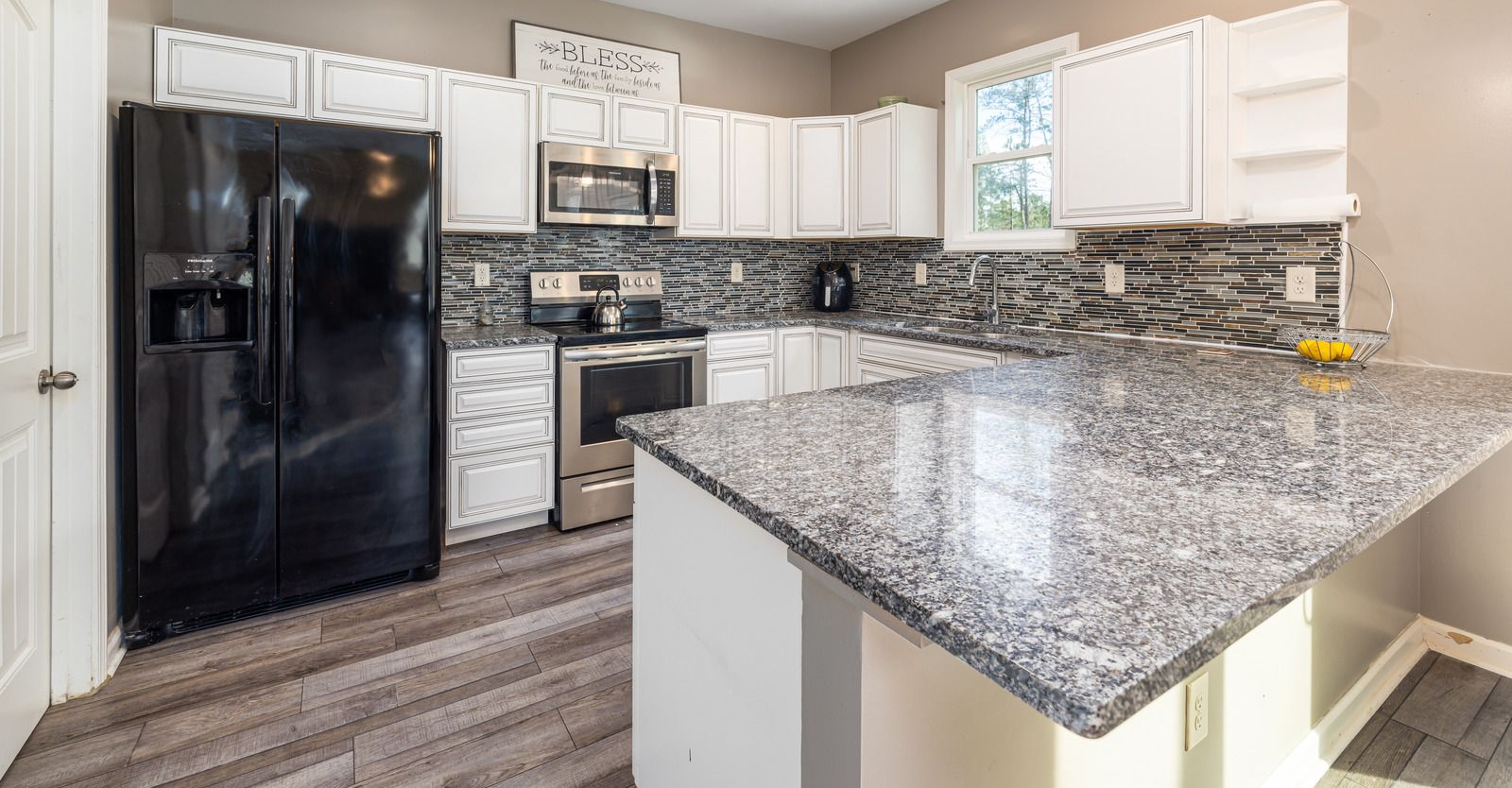
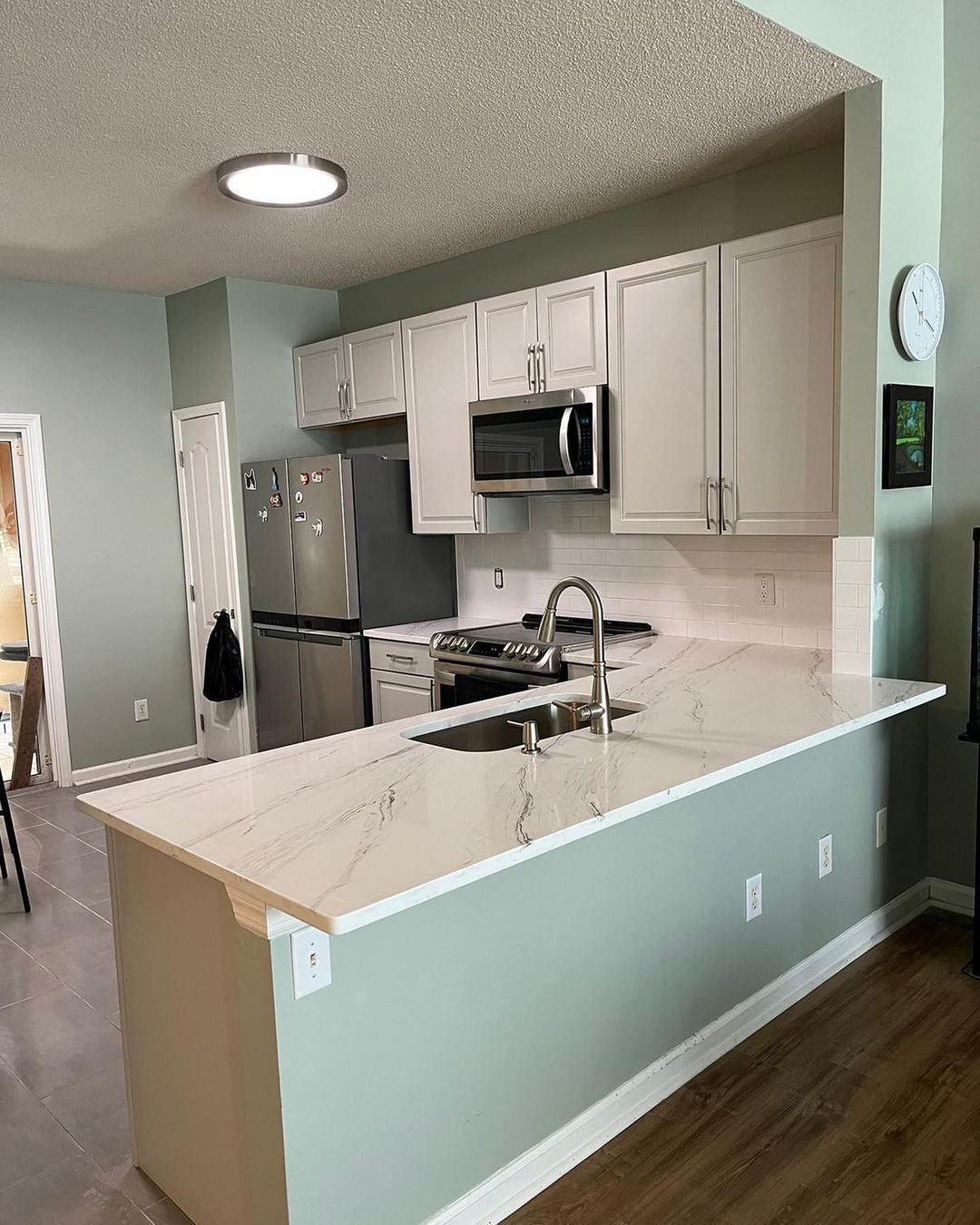
Granite vs Quartz: Which Countertop Fits Your Kitchen?
QUICK ANSWER: Granite and quartz are both excellent countertop surfaces, but they behave differently. Granite is natural stone, so it handles high heat, tolerates hot pans, and holds up outdoors, though it is porous and needs periodic sealing. Quartz is engineered stone, so it is non-porous, resists stains without sealing, and shrugs off chips, but it is heat sensitive and fades in direct sun. The right choice comes down to how you cook, how much upkeep you want, and where the counter will live.
You are standing in a slab yard with two samples in hand. One is a piece of granite full of movement, no two square feet quite alike. The other is a quartz sample with a clean, even pattern that repeats predictably across the slab. Both feel solid and cool to the touch, both look ready for years of use, and the salesperson has just told you that either one would work. That is technically true, and it is also why the decision stalls so many kitchen projects. The two materials are close enough in quality that the choice really rides on the details of your household, not on which one is objectively better.
The honest answer is that neither wins outright. They trade strengths. Understanding where each one leads and where each one lags is the fastest way to land on the surface you will still be happy with a decade from now. Here is how they compare on the things that actually shape daily life in a kitchen.
How the Two Materials Are Actually Made
The core difference starts underground and in the factory. Granite is an igneous rock formed from cooled magma, made up of minerals like feldspar, mica, and quartz. Slabs are cut straight from quarried stone, which is why every one carries its own swirls, veining, and color shifts. No two granite counters are identical, and that natural variation is either the main draw or the main hesitation, depending on your taste.
Quartz counters are engineered. Manufacturers grind natural quartz, then bind it with polymer resins and pigments and press it into slabs. The result looks like stone but comes out far more uniform in color and pattern, and it can be tuned to mimic marble or other stones with cleaner, more consistent lines. That same engineering makes quartz non-porous all the way through, which drives most of its practical advantages and one of its notable weaknesses.
There is a handling difference worth knowing before install day. Granite is dense and heavy, and a large run or island may call for extra structural support and careful lifting. Quartz slabs are milled to a uniform thickness and tend to be lighter and easier to maneuver into place. For most homeowners this is a behind-the-scenes detail, but it can affect how a tricky layout gets fabricated and set.
Heat, Scratches, and Everyday Wear
This is where granite pulls ahead. Because it formed at extreme temperatures, granite is thermally stable at anything a kitchen can throw at it. You can set a hot pan straight from the burner onto a granite surface without worrying about scorching or thermal shock. It also resists scratches from knives and everyday grit.
Quartz is durable in a different way. It resists chips and surface scratches even better than granite, which makes it forgiving around sink cutouts and busy prep zones. Its weak point is heat. The polymer resin that binds quartz begins to degrade at temperatures well below what a hot pot delivers, and a pan pulled straight from the oven and set on a cool quartz surface can leave a permanent scorch mark, discoloration, or even a small crack from the sudden temperature swing. Fabricators consistently report heat damage as the most common quartz complaint they see over the years.
TIP: If you choose quartz, build the trivet habit from day one. Keep a couple of trivets or hot pads within reach of the stove and oven, and treat them as non-negotiable for anything coming off direct heat. It is a small routine that prevents the single most frequent kind of quartz damage.
Stains, Sealing, and Keeping It Clean
Quartz has the clear edge on stains. Its non-porous surface does not absorb liquids, so coffee, wine, oil, and acidic spills wipe away without soaking in. It also needs no sealing, ever, which appeals to anyone who wants to wipe the counter and move on. The non-porous surface holds onto fewer bacteria as well, a quiet plus in a kitchen.
Granite asks for more attention. It is porous, and how porous varies from slab to slab. A dense, dark granite may absorb very little, while a lighter stone with more feldspar can pull in a red wine spill visibly in minutes if it has not been sealed. Sealing closes those pores, and most fabricators recommend resealing on a regular schedule, often yearly, though a dense stone with a quality sealer can go longer. Skip the sealing and you risk permanent staining. When it comes time to clean either surface, the rules are the same: mild soap and warm water, and steer clear of abrasive pads and acidic or bleach-based cleaners that can dull a polish or, in the case of quartz, discolor the resin.
Picking a mount that can handle the spot
Mount choice usually comes down to how much the screen has to move and how much it weighs.
A fixed mount sits flush and looks clean, but it gives you nothing on the angle, which makes it a poor match for most fireplace jobs. A tilting mount adds the downward pitch you almost always need up there. A full-motion mount hands you the most control and the best shot at a comfortable picture, at the cost of a beefier bracket and a more demanding install. Weight and screen size steer the final call, since a big panel on an extended arm pulls hard on the wall.
That wall has to carry it. Never hang a TV over a fireplace without hitting studs or, on masonry, setting proper heavy-duty anchors rated for the load. Skip that and the whole thing is one bump away from the floor. Get the screen size in proportion, too. A TV that reads the same width as the firebox or a touch smaller keeps the wall balanced, while an oversized panel crammed above a narrow hearth looks squeezed and top-heavy.
Appearance: Predictable or One of a Kind
Aesthetics are personal, and this is often what settles the decision once the practical factors are a wash. Granite offers natural, unrepeatable movement. Each slab reads like a single piece of stone art, and if you want an island that draws the eye and anchors the room, granite delivers that drama. The tradeoff is that you are choosing a specific slab, so what you see is what you get, veining and all.
Quartz offers control. Because it is engineered, the color and pattern stay consistent across the whole run, and you can pick from designs that read sleek and modern or that convincingly imitate marble without marble's fragility. If your style leans contemporary and you want the counters to feel calm and coordinated rather than bold, quartz makes that easy to achieve and easy to match to cabinets and backsplash.
WARNING: Quartz is the wrong material for a sunny outdoor kitchen or a covered patio bar that catches afternoon light. The resins in quartz break down under sustained UV exposure, turning yellow, fading unevenly, or going chalky, and most manufacturers void their warranties for outdoor installations. Granite, whose color comes from stone minerals rather than resin, holds its look outdoors and is the safer of the two for exterior work.
Where Each Material Belongs
Fit depends on the room. In a hardworking kitchen where pots sometimes land on the counter and someone cooks daily, granite's heat tolerance is a genuine advantage. In a kitchen where the cook is careful with trivets and values a spotless, low-fuss surface, quartz rewards that with almost no maintenance.
Bathrooms add a wrinkle. Vanities meet cosmetics, nail polish remover, and hair products, and those chemicals can be harsher on quartz resin than most people expect. A well-sealed granite can tolerate that chemical exposure without trouble, so natural stone often earns its place on a vanity top. For the Triangle's summer humidity and the hard water common in the area, both materials handle moisture well, though hard water can leave spots on any polished surface, which is one more reason to wipe counters dry after use. And for an outdoor kitchen, which plenty of Raleigh-area homes want for entertaining, granite is the clear pick.
Matching the Choice to How You Cook and Live
Strip away the marketing and the decision gets simple. Choose granite if you cook with real heat, want a surface that survives hot pans and outdoor sun, and do not mind sealing it on a schedule to keep stains out. Choose quartz if you want a low-maintenance, stain-resistant surface with a consistent modern look, and you are willing to protect it from direct heat.
Whichever way you lean, the material is only half of a good result. Accurate measurement, clean cuts, well-placed seams, and a level, well-supported install are what separate a countertop that looks flawless from one that shows every shortcut. A surface chosen well and fitted well is the one that still looks right long after the project is a memory.
Frequently Asked Questions
Is granite or quartz more heat resistant?
Granite, by a wide margin. It formed under extreme heat, so hot pans do not scorch or crack it. Quartz uses polymer resins that degrade at far lower temperatures, leaving permanent marks from direct contact.
Does quartz really never need sealing?
Correct. The manufacturing process binds quartz with resin throughout, so it is non-porous and has no pores to seal. Soap and water is enough. Granite is porous and typically needs resealing yearly to prevent staining.
Which one stains more easily?
Granite, especially lighter unsealed slabs, because natural pores absorb liquids. Sealing reduces the risk but must be kept up. Quartz resists stains better, though harsh chemicals like bleach or nail polish remover can discolor it.
Can I put either countertop in an outdoor kitchen?
Granite works outdoors because UV light does not affect stone minerals, so color holds in sun. Quartz is not recommended: sunlight breaks down its resins, causing yellowing, and most manufacturers void warranties for exterior installs.
How long do granite and quartz countertops last?
Both last decades with proper care. Quartz stays low-maintenance throughout, never needing sealing and resisting chips. Granite lasts equally long but depends on regular sealing. The surface that lasts best matches how the household cooks.
Which is better for a busy family kitchen?
It depends on habits. Heavy cooking with pans landing on counters favors granite's heat resistance. Wanting a surface that wipes clean and needs no upkeep favors quartz, provided everyone in the house respects trivets consistently.
Where Granite and Quartz Each Earn Their Place
The comparison never resolves into a single winner because granite and quartz answer different questions. One brings thermal toughness and natural character that suits heavy cooking and outdoor settings, holding its color under sun and hot cookware alike. The other brings a sealed, predictable surface that asks almost nothing beyond a wipe with soap and water. Once you know which of those matters more in your own kitchen, the slab yard stops feeling overwhelming and the decision tends to settle itself.
Material is only part of the outcome, though. Seam placement, edge profiles, sink cutouts, and a properly supported substrate decide whether a counter reads as custom work or as something merely set in place. The Countertop Guy, LLC
has spent 6
years fabricating and fitting granite and quartz for homeowners in Raleigh, NC, and that kind of experience tends to show up in the small details people notice long after the project itself has faded from memory.